

On June 5, World Environment Day, our team spent the morning in Samburu doing the most direct kind of climate work there is: putting trees in the ground.
There were no massive stages, no printed banners, and no speeches from politicians. When you live in a semi-arid landscape that is actively turning to dust, you do not have time for ceremonies. You just need to get roots into the dirt. We treated the day as community action, not a photo opportunity. You cannot farm likes on social media when your hands are covered in red clay, and you cannot impress the sky into raining just because you took a good picture.
The Site and The Trees
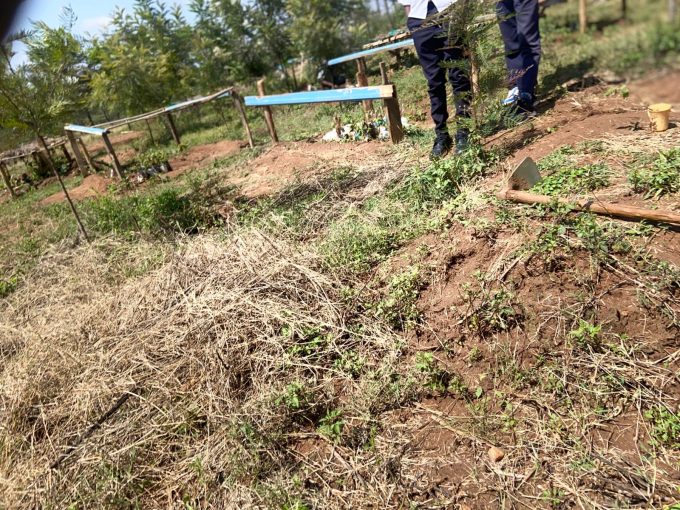
We chose a specific site for this year’s planting: the degraded perimeter around the Wamba community borehole.
This area is a heavy traffic zone. Every single day, hundreds of goats, sheep, and cattle are driven through this corridor to access the water troughs. Over the years, the constant trampling of hooves has killed the grass. The goats ate the remaining bushes. The sun baked the exposed dirt into a hard, cracked shell. When it rains, the water just slides off the surface and causes deep erosion gullies near the pump. If we lose the soil around the borehole, we eventually lose the infrastructure that holds the water.
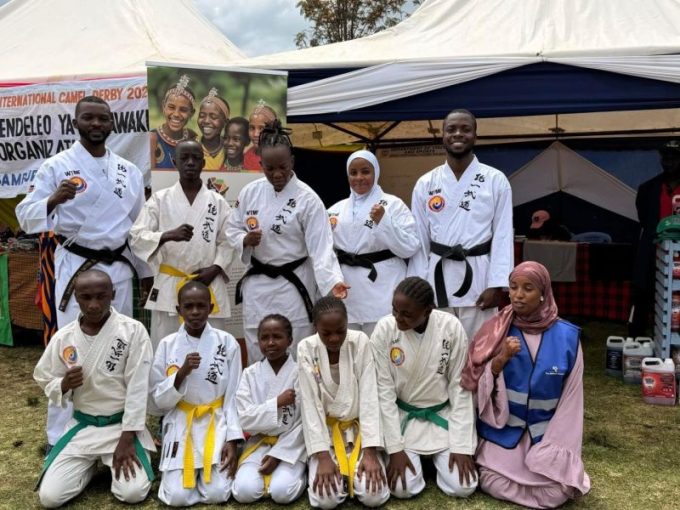
When we arrived, we parked the car and opened the trunk. We did not work alone. We worked alongside the local women’s beadwork cooperative, a group of mothers who use the borehole daily, and a dozen young men from the area who brought their own heavy jembes (hoes) and pickaxes.
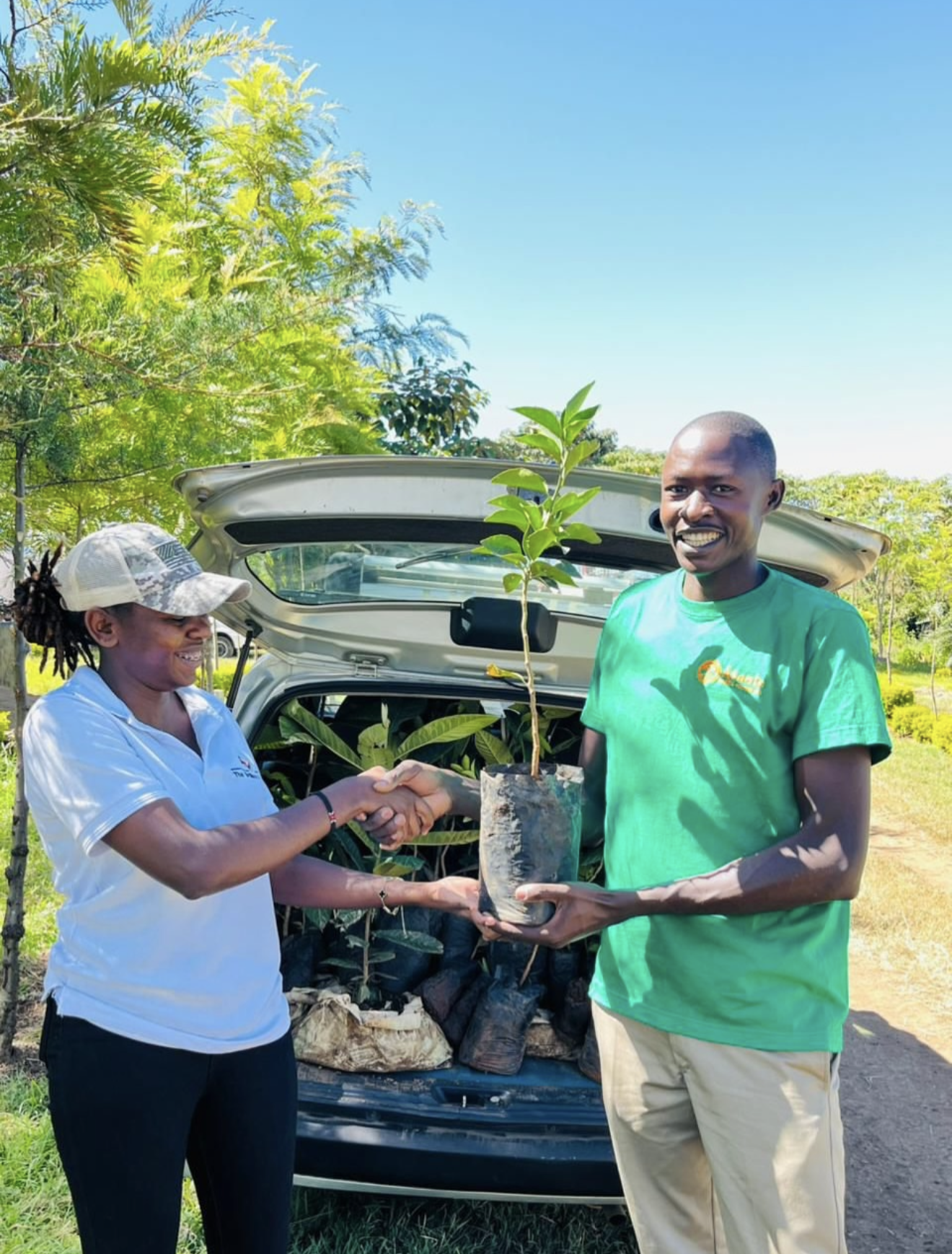
We brought strict, resilient species.
- Lderkesi (Umbrella Thorn Acacia): Built to survive months without rain.
- Desert Date (Balanites aegyptiaca): Armed with heavy thorns that keep hungry goats away from its main stem while the taproot digs deep into the water table.
One by one, we handed them off—team members to community members, hands to hands.
The Physical Reality of Planting
Tree planting doesn’t look dramatic in the moment. It is slow, repetitive, and exhausting manual labor.
First, you have to break the hardpan. The young men swung their pickaxes into the baked earth. The ground is so dry here that it fractures into hard clods instead of crumbling. Once the hole is dug, it has to be shaped to catch runoff. We dug wide, shallow basins around each hole to ensure that any future rainwater pools directly over the roots instead of washing away.
Then comes the seedling. You carefully peel back the plastic nursery tube, making sure the soil around the roots stays intact. You place it in the hole. You pack the loose dirt back in, pressing it down firmly with your boots so there are no air pockets. You pour exactly three liters of water from a plastic jerrycan directly onto the base.
And then you wait.
That’s the whole point. Every tree we planted that morning is a small bet on what Samburu looks like in ten years, and it’s a bet we’re used to making.
A seedling in the ground looks insignificant against the massive, barren landscape of the Wamba plains. It is just a tiny green stick surrounded by miles of red dirt. It does not provide shade today. It does not stop the wind today. But you are not planting for today. You are planting for the goats that will need pods in 2035. You are planting for the women who will need shade while waiting at the borehole a decade from now.
Defending the Bet
You cannot just plant a tree in Samburu and walk away. If you leave a fresh seedling exposed, a goat will eat it before you even drive back to town.
After the watering was done, the hardest work began. We spent three hours walking into the surrounding bush with pangas (machetes), cutting dead, thorny branches from established wait-a-bit bushes. We dragged these heavy, jagged branches back to the borehole and built tight, circular bomas (cages) around every single seedling. Your hands get cut up. Your clothes get snagged. But a thick wall of thorns is the only effective insurance policy a young tree has against livestock.
By midday, the sun was punishing. The water in our own drinking bottles was warm. We loaded the empty plastic nursery tubes and the empty jerrycans back into the Probox. We wiped the dust off our faces and looked at the site. The landscape was now dotted with hundreds of small thorn cages. Inside each one was a quiet, living thing.
The Other 364 Days
World Environment Day comes around every year. It is a good excuse to organize, to get a car, and to get people together. But what decides whether these trees are still standing next year is what we do on the other 364 days.
That part doesn’t come with a hashtag, but it’s the part that matters. It is the unglamorous grind of survival.
Exactly 450 seedlings went into the ground that morning. Who is responsible for them now?
- The Brilliant Feminine Youth Volunteers: Two of our team members live in the immediate area. They are assigned to check the site twice a week. They inspect the thorn bomas to ensure goats haven’t broken through.
- The Borehole Committee: We made an agreement with the elders managing the water pump. Every evening, when the herds have gone home, the leftover water in the troughs—the spillover that usually just turns the dirt to mud—is scooped up in buckets by the local women and poured onto the seedlings.
We will lose some. We always do. Termites will get to the roots of a few. A stray donkey might kick over a boma. The sun might just be too harsh for the weaker saplings. We expect a 20 to 30 percent mortality rate in the first dry season. When the short rains return in November, our youth team will come back to Wamba, count the empty holes, and replace the dead ones.
We do not just plant trees. We raise them. We defend them. And tomorrow, we go back out to check the soil.