

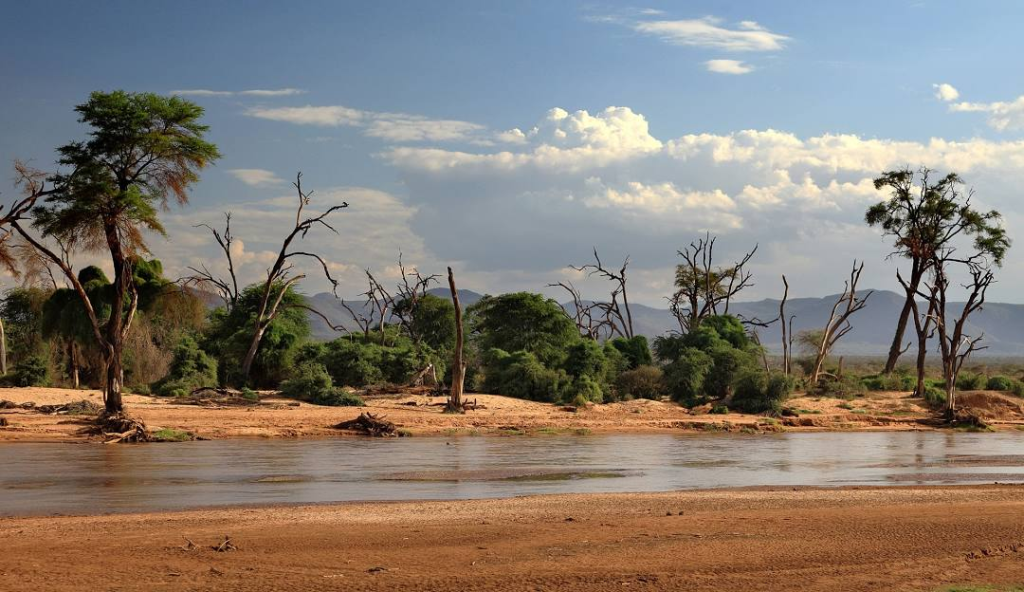
Samburu’s climate is changing fast, and pastoralist families feel it before almost anyone else does. You see it in the dust that coats the acacia leaves by mid-morning. You feel it in the dry, hot wind that cracks your lips. We are pastoralists. Our wealth, our food, our marriages, and our daily routines revolve around our livestock. When the land changes, we are the very first to take the hit. There is no buffer.
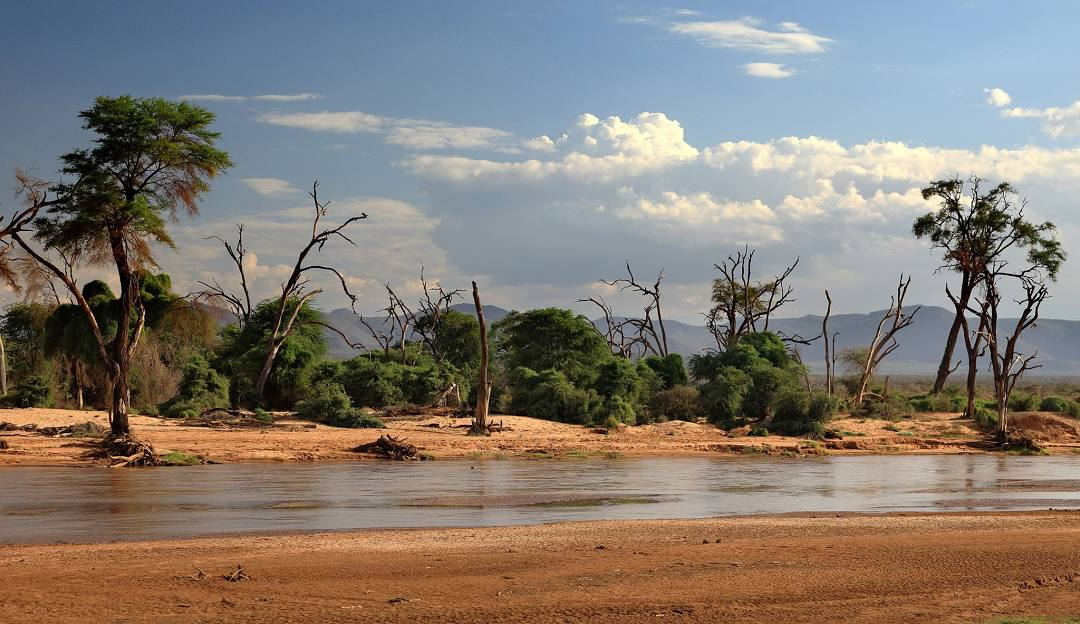
Ten years ago, the rains followed a schedule you could trust. You knew when to move the herds. You knew when the seasonal rivers would flow and exactly when they would recede. Now, the short rains fail completely. The long rains come late, dump too much water at once in violent flash floods, and wash away the topsoil. The Ewaso Ng’iro river shrinks to muddy puddles months earlier than it used to. The sand dams dry out. The wells need to be dug deeper every single year.
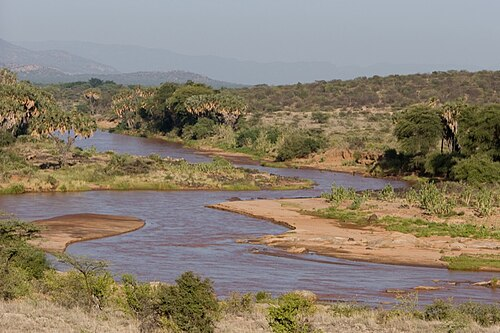
For young women in Samburu, this is not an abstract climate problem debated in distant conference rooms. It means walking extra miles. When the rivers dry, the women walk further to scoop water from deep holes dug into the dry riverbeds. It means waking up at 4:00 AM to secure a spot in the line for water. When the grass dies, the men take the cattle further out, sometimes crossing into neighboring territories. That sparks conflict over grazing rights. Families are split up for months. The pressure falls heavily on the women and children left behind in the manyattas.
The land is stripping itself bare. Overgrazing happens because the herds have nowhere else to go. The bare soil bakes in the equatorial sun. It turns into a hardpan. Nothing grows on a hardpan. When the rain finally falls, it does not sink in. It accelerates across the baked earth, taking the remaining loose dirt with it, carving deep, ugly gullies into the landscape.
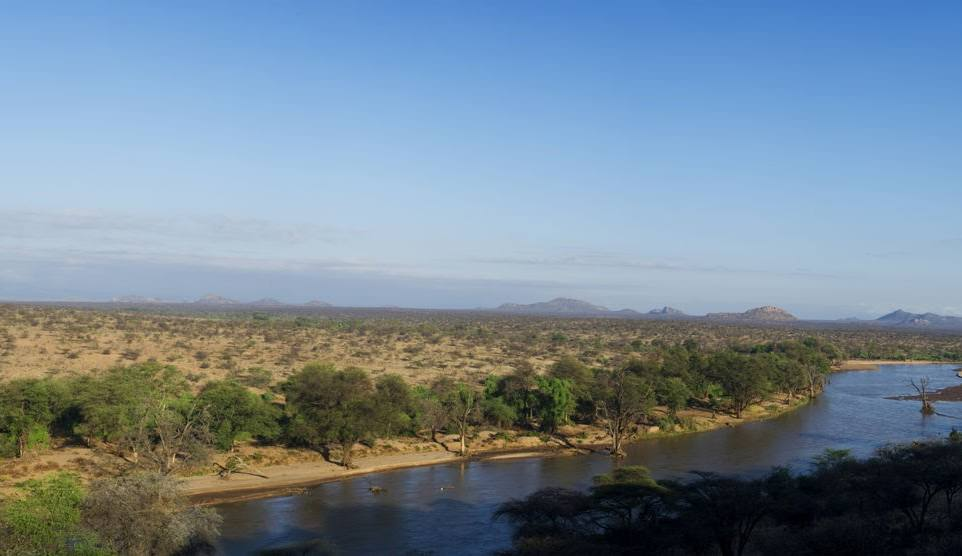
As pastoralists, we manage mixed herds. We keep cattle, goats, sheep, and camels. Each animal relies on a different part of the landscape. Cattle need grass. Sheep graze low. Goats browse on the bushes and low branches. Camels reach high into the tree canopies. When the rains fail and the grass dies, the cattle suffer first. But the trees act as the final safety net. The deep roots of the acacia keep it alive long after the grass has turned to dust. The goats and camels can survive on the acacia pods and the tough leaves. When the trees die, or when they are cut down for quick charcoal cash, that final safety net is gone. Entire herds collapse. The bones pile up outside the manyattas. We plant trees to rebuild the safety net for the herds. Without the herds, the Samburu culture ceases to exist. We do not separate the survival of the trees from the survival of our families.
Planting a tree doesn’t fix that by itself. People from outside come in with quick ideas. They bring thousands of exotic seedlings. They bring eucalyptus and pine. They plant them, take photos in their clean boots, and leave. Two months later, the seedlings are dead. Or worse, they survive and suck the remaining water out of the already depleted ground.
A single seedling is just a fragile stick in the dirt. One seedling takes years to become shade. It takes much longer than that to change the water table around it. It takes decades for a root system to grow deep enough to stabilize a collapsing riverbank. It takes a forest to alter the local microclimate, slow down the wind, and draw moisture back into the soil. We know this. We know exactly how slow the process is. We plant anyway, because the alternative is doing nothing while the land keeps degrading until it is unlivable.
Our nurseries are run by the community, not for it. We do not hire outside contractors to grow our seedlings. We run the shifts ourselves. The Brilliant Feminine youth initiative is a collective of young Samburu women. Some of us dropped out of school to help our families survive during the severe droughts. Some of us finished high school and could not find jobs. We built this project to take control of the land we stand on. We do the heavy lifting.
A team of fifteen young women rotates the daily work. We start early, before the sun gets too hot. The first job is water. We haul it in twenty-liter jerrycans. We check the soil moisture of thousands of tiny potting tubes with our bare hands. You have to know the difference between damp and soaked. If you give a seedling too much water, the roots rot. If you give it too little, the roots turn to crisp wire and die.
We mix the potting soil ourselves using wheelbarrows and shovels. We do not buy chemical fertilizer. We walk out into the grazing lands and collect dried goat and cow manure. We mix it with coarse river sand and local topsoil. The ratio matters heavily. We use three parts soil, one part sand, one part manure. This mimics the harsh dirt the trees will eventually face. If you raise a seedling in perfect, store-bought compost, it will die of shock the minute you plant it out in the wild. We train them tough from the day the seed germinates.
We do not order seeds from a catalog. We go out and find them in the bush. This requires looking at the landscape the way our grandparents did. You find the oldest, strongest trees. You look for the ones that survived the severe droughts of 2009 and 2017. Those are the genetics we want. We wait for the seed pods to dry on the branches. We knock them down with long sticks or collect them from the ground before the insects get them. Sometimes we walk for miles to find a specific tree that is known to produce healthy pods.
Some seeds are stubborn. Acacia seeds have hard outer shells. In the wild, they wait for an elephant or a goat to eat them. The stomach acids break down the shell. When the animal leaves droppings, the seed is ready to germinate, packed in its own localized fertilizer. We replicate this process. Sometimes we collect the seeds directly from goat pens. We wash the droppings and pick out the seeds. For others, we use boiling water. We boil water over a fire, take it off the heat, drop the seeds in, and leave them to soak for twenty-four hours. The hard shell softens. We plant them the next day. This is practical science. It costs nothing but time and firewood.
We only plant what belongs here. Seedlings are raised locally, in soil and conditions they’ll actually have to survive in later. We plant Lderkesi, the umbrella thorn acacia. It defines the savanna. Its taproots go straight down, finding deep aquifers without competing with shallow surface grass. Its pods drop in the dry season, providing high-protein feed for our goats when everything else is dead.
We plant Ltepes, the fever tree, near the dry waterbeds to hold the banks together when the flash floods come. We plant Reteti, the wild fig. It is a sacred tree in our culture. You find it gripping the sides of rock faces. We plant it because it provides dense, cooling shade, and its presence indicates underground water. We do not plant cash crops. We are not growing timber to sell. We are growing biological infrastructure. A mature acacia acts like a water pump and a shade structure combined. The soil under its canopy stays cooler. Grass grows better there. Microbes survive. That single tree becomes a small island of functioning ecology. We need thousands of these islands to stitch the land back together.
Growing the seedling in the nursery is the easy part. Moving it into land that’s been stripped by drought and overgrazing is where the real work starts.
We wait for the rains. You cannot plant on a schedule set by an office. You plant when the clouds break and the dirt softens. Sometimes that means waking up at midnight to organize the transport. We load the seedlings onto donkey carts or into the back of hired pickups. We take them out to the degraded zones. These are the areas where the grass is completely gone, leaving red, cracked earth and dust.
A typical planting day in the field strips you down. The sun hits peak intensity by eleven in the morning. There is no shade, because the lack of shade is exactly why we are there. The red dust gets into your eyes, your nose, and your teeth. Your hands blister from the pickaxe handles. We dig semi-circular bunds. We call them earth smiles. They are large, curved trenches dug against the slope of the land. It takes a pickaxe and serious physical labor to dig one. You swing the pickaxe into earth that feels like concrete. Sometimes sparks fly when the metal hits buried quartz. We work in pairs. One person breaks the hardpan, the other shovels the loose dirt to form the curved wall of the bund.
Water moves incredibly fast over bare ground. If you just dig a simple hole, the heavy rain will wash right past the seedling, or rip it out entirely. When the rain falls on an earth smile, the water hits the trench, stops, and sinks deep into the ground exactly where the seedling is planted. We drink warm water from plastic bottles and keep going. You measure the success of the day by the ache in your shoulders and the number of trenches carved into the hillside.
Then comes the defense. Goats eat everything. They will strip a year of growth off an acacia seedling in five seconds flat. We build bomas. We gather wait-a-bit thorn branches from the surrounding bush and weave them into tight cages around every single seedling. It is bloody work. Your hands get cut to pieces. The thorns are sharp enough to puncture truck tires. But if you skip this step, you are just feeding the goats.
Even with the bunds and the heavy thorns, we lose trees. A bad drought year might kill forty percent of what we plant. Termites take another ten percent. Floods sometimes wash away entire rows. We accept the losses. We map the dead ones, figure out why they failed, adjust our methods, and replace them the next season. We do not quit because of a bad survival rate.
We also work alongside the Kenya Forest Service on biodiversity and habitat restoration, protecting the water sources the whole region, people and livestock both, depends on.
A lot of community groups fight with the government. We chose a different route. KFS has jurisdiction over the gazetted forests—places like the Mathews Range and the Ndoto Mountains. These highland forests are the water towers for the entire region. When they burn, or when illegal loggers cut them down for charcoal, the rivers in our lowlands run dry. The connection is direct and brutal.
Our partnership with KFS is highly practical. It looks like planning meetings sitting on plastic chairs under a tree. We sit down with the local forest wardens. We bring our knowledge of the lowlands and pastoralist movement patterns; they bring their legal mandate and resources over the highlands.
Day to day, it means joint patrols and shared resources. KFS officers help us secure the necessary permits to access restricted seed banks deep inside the protected forest reserves. When we hold a major planting drive in a badly degraded buffer zone, KFS provides the heavy trucks required to move our thousands of seedlings from the nursery to the planting site. They bring shovels. They bring technical foresters who help us calculate the exact spacing needed between different species to prevent them from competing for water and choking each other out in ten years.
In return, we act as the bridge on the ground. We understand the community politics. The legal boundaries of the forest often clash with traditional grazing routes. KFS enforces the boundaries drawn on a map. Our elders follow the routes laid down by generations of cattle movement. When drought hits, the herds must move up into the highland forests to survive. If they are blocked by armed rangers, tension spikes.
This is where our youth team steps in. We organize dialogues before the peak of the dry season. We map out temporary, emergency grazing corridors with KFS. We agree on which specific zones are completely off-limits due to recent planting, and which areas can handle light grazing. We mark the boundaries with painted rocks or specific tree branches. When we, as young Samburu women from the community, sit down with the elders and explain why a certain valley needs to be closed off for two years so the new trees can establish, the conversation goes differently than it does with armed guards. We speak the same language. We understand the need for grazing. We negotiate traditional agreements to keep the cows out of the restoration zones. It requires constant communication. We use basic smartphones and WhatsApp groups to alert the wardens when a herd is moving through, ensuring there are no surprises and no violence. We bridge the gap between state forestry law and indigenous land management.
We also collaborate directly on restoring specific riparian zones. The Ewaso Ng’iro and its tributaries cross multiple jurisdictions. We pinpoint the exact bends in the river where erosion is worst, where the banks are collapsing into the water. KFS supplies specific deep-rooting saplings from their central nurseries, and our youth team provides the hands-on labor. We terrace the banks and plant the trees. We share the burden. They have the institutional weight; we have the local trust and the hands willing to dig in the mud.
None of this shows results in a single season.
That’s the part people don’t always want to hear. Donors want to see a barren wasteland turned into a green forest in twelve months. They want an instant return on their investment. They want a neat, measurable impact report by the end of the fiscal year showing massive growth.
Nature in a semi-arid zone does not care about fiscal years. It does not care about funding cycles.
Year one, the seedling barely grows above the dirt. It spends all its energy sending a taproot down through the hardpan, desperately searching for remaining moisture. Above ground, it looks like a dead stick. You have to trust that it is working underground.
Year two, if the goats have not eaten it and the termites have not hollowed out the stem, it puts out a few thin branches and leaves.
Year five, it might finally reach waist-high. It casts a shadow the size of a dinner plate.
It takes ten years before you see a real change in the soil chemistry. It takes twenty years before the regional water table shifts.
This work demands a specific kind of patience. It is a long endurance game. We are not planting these trees for ourselves to sit under. We are planting them for the next generation of pastoralists. We are planting them so our younger sisters will not have to walk ten miles for a jerrycan of dirty water. We are planting them so the herds have fodder during the dry months of 2040.
The climate is moving fast. The rains are becoming violent and unpredictable. We cannot control the global temperatures. We cannot force the clouds to break over our specific valleys.
What we can do is hold the soil in place. We can build the root systems that will catch the water when it finally falls. We can rebuild the local ecosystems, one thorny, stubborn tree at a time. It requires waking up early, hauling heavy water cans, bleeding from thorn pricks, and watching half your work die in a drought, only to do it again.
It is slow. It is meant to be slow. That’s the reason we keep showing up to do it, season after season. The land takes its time to heal. We simply provide the hands to start the process.