

Trash does not dissolve into the landscape. In towns across Samburu, it piles up. It accumulates along the drainage ditches, tangles in the thorny branches of the acacia bushes, and blows across the dirt roads where our children play. The most visible sign of environmental breakdown isn’t always a dried-up riverbed; sometimes, it is the mountain of thin, shredded plastic bags and discarded water bottles choking the edges of our market centers.
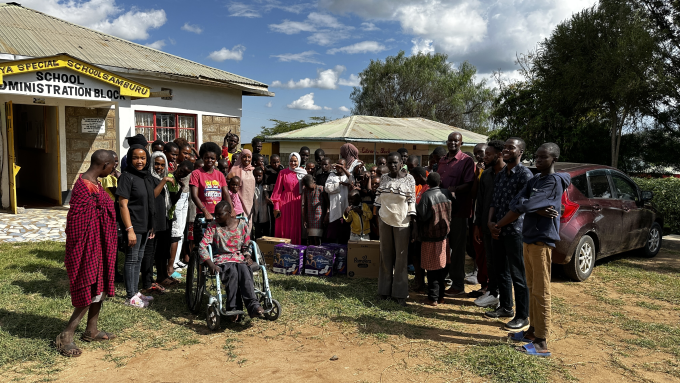
On World Environment Day, while part of our team was out planting seedlings at the Wamba borehole, the rest of the Brilliant Feminine collective tackled the immediate, unglamorous reality of plastic pollution. We organized a massive community cleanup in Maralal town.
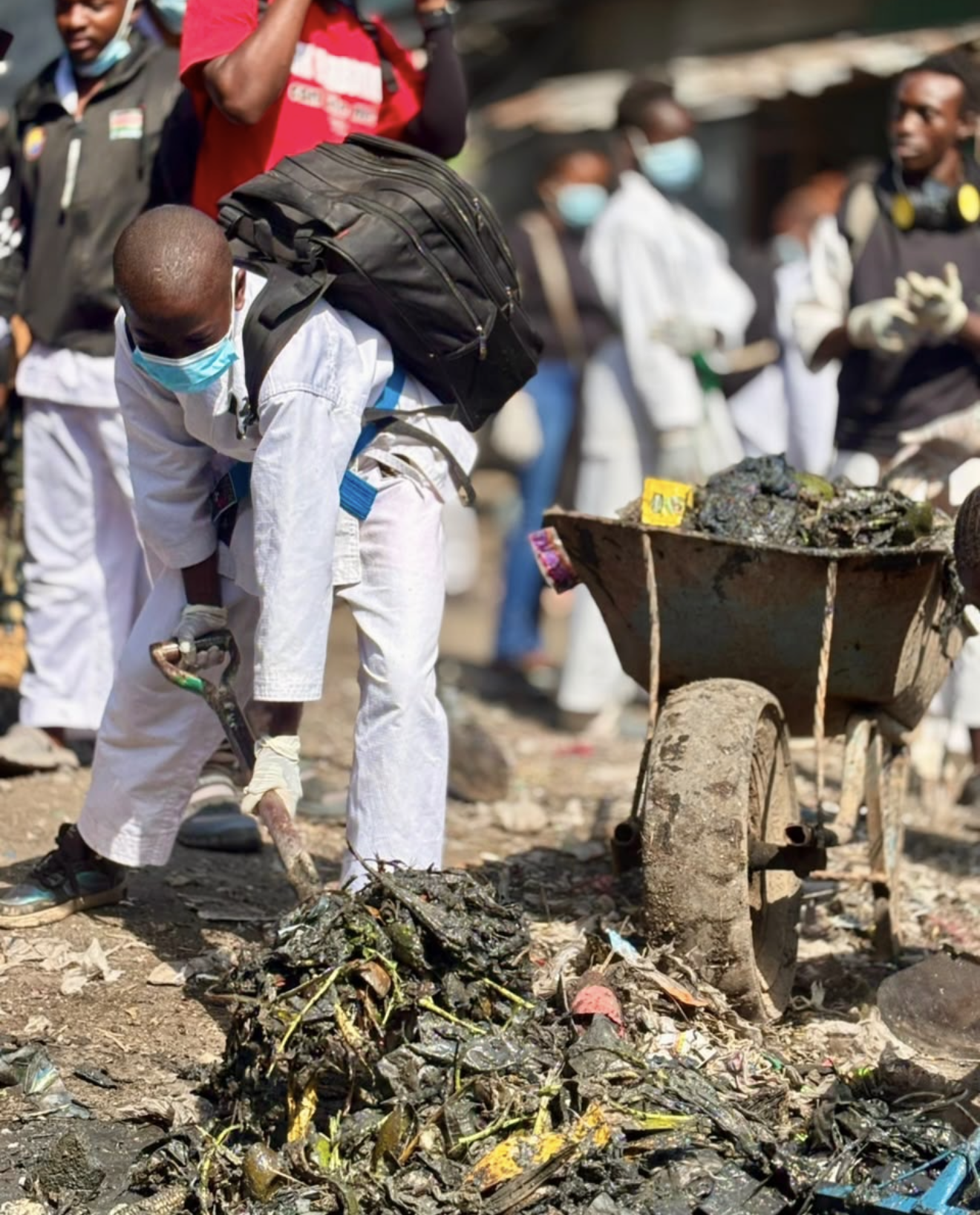
We did not do this alone. To pull off a cleanup that actually leaves a dent in the waste, you need hands, energy, and a group of people who are not afraid of heavy lifting. For this drive, we partnered with Kaizen Martial Arts Kenya. They brought a team of disciplined young athletes who understand that taking care of your body means absolutely nothing if you neglect the environment that sustains you. Together, we turned a regular morning into a direct, physical intervention for our local ecosystem.
The Problem with Plastic in Pastoralist Land
To an outsider, a pile of trash on a street corner is just an eyesore. In a pastoralist community like Samburu, it is a direct hazard to our livelihood and health.
When wind blows through Maralal, it picks up thin-gauge plastic bags and scatters them into the grazing lands that border the town. Our livestock—goats, cows, and sheep—do not know the difference between dried grass and a piece of discarded plastic. They eat the plastic.
Once swallowed, the plastic cannot be digested. It forms a hard, compact ball inside the animal’s rumen. It blocks the digestive tract, preventing the animal from processing real food. Over weeks, the animal starves to death from the inside out, its stomach completely full of synthetic garbage. Ask any local butcher in Maralal how many plastic bags they pull out of livestock carcasses every single week. The number is terrifying. When we leave plastic on the ground, we are actively poisoning the herds that our families depend on for survival.
Furthermore, blocked drainage ditches are a breeding ground for disease. When the sudden, heavy rains hit the baked streets of Maralal, the water cannot flow. It hits blocks of compacted plastic bottle caps, old shoes, and food packaging. The water backs up, floods the market stalls, and turns into stagnant pools where mosquitoes breed, driving up malaria rates in the surrounding homes. Cleaning up the trash is not about making the town look pretty for visitors; it is an act of preventative public health and community self-defense.
Discipline in the Dirt: Working with Kaizen Martial Arts
The cleanup began at 7:30 AM at the main market square. The team from Kaizen Martial Arts Kenya arrived ready to work. In martial arts, Kaizen stands for continuous improvement—the practice of making small, deliberate, daily changes that add up to mastery. That philosophy fits our approach to environmental work perfectly. You do not fix a climate crisis with one massive gesture; you fix it by showing up every day and cleaning your own yard.
We split into four teams, each taking a specific sector of the town’s busiest trade area. We brought gunny sacks, thick canvas gloves, and iron rakes.
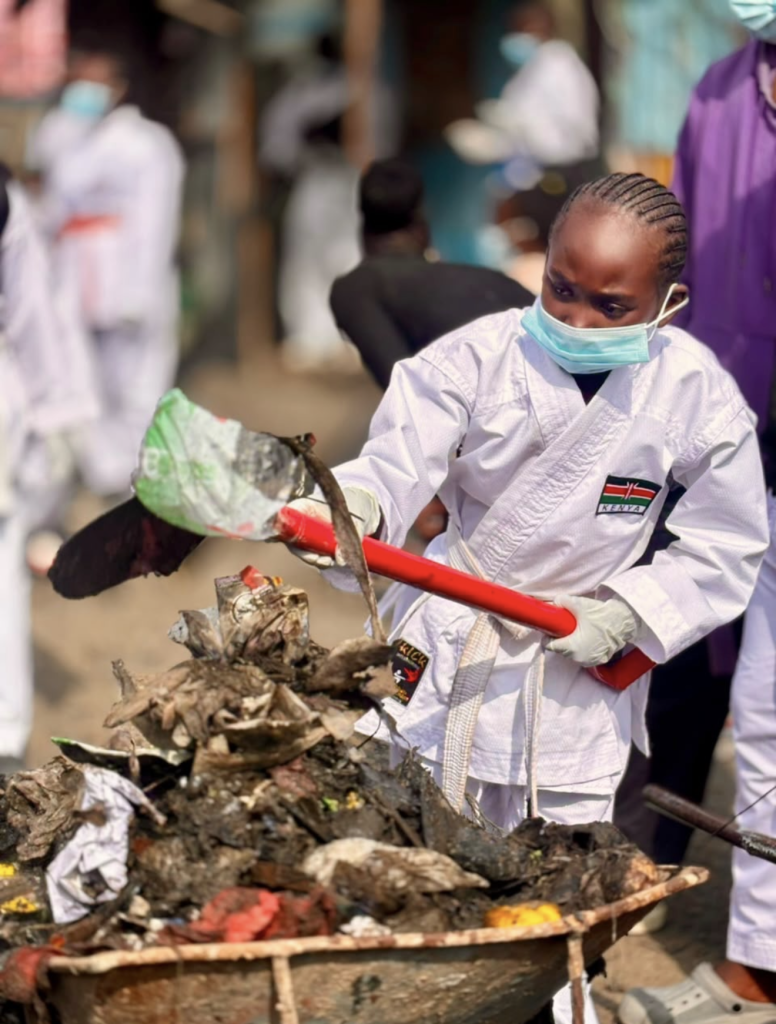
The physical work was intense. Plastic bottles get wedged deep under the roots of roadside bushes. Mud caked over old layers of trash, requiring us to dig out layers of plastic that had been buried for months. The Kaizen team brought a level of focused energy that transformed the mood of the day. They didn’t complain about the smell of the drainage ditches or the heat of the morning sun. They approached the cleanup with the same discipline they bring to the dojo floor.
“True strength isn’t just about what you can lift or how hard you can strike,” one of the Kaizen coaches reminded the youth volunteers as we hauled the first twenty sacks of trash to the collection point. “It’s about taking responsibility for the space you occupy.”
By mid-morning, the market vendors started noticing the effort. Local shop owners who usually just watch from their storefronts stepped out to help. Some brought out brooms to sweep the pavement in front of their shops. Others handed out cold water to our volunteers. This is how true community action works. It is contagious. When people see young women and young athletes picking up trash they didn’t drop, it challenges the widespread assumption that keeping a town clean is “someone else’s job.”
The Count and the Strategy
By 1:00 PM, our limbs were aching, our gloves were stained black from the drainage sludge, and the main market corridor looked entirely different.
We collected over 120 large gunny sacks of compressed waste. The majority of the trash consisted of single-use plastic water bottles, cheap synthetic packaging, and discarded nylon cords. We didn’t just pile the sacks on the side of the road for the wind to rip open again. Through our coordination with local waste management officers, we loaded the bags onto a designated truck to be transported directly to the regional landfill site, keeping it permanently out of the pastoralist grazing zones.
Moving Beyond the One-Day Event
A community cleanup on World Environment Day is a powerful statement, but it is a temporary fix. If we stop here, the market square will be covered in plastic again by next month. The trash returns because the habits and the systems haven’t changed yet.
That is why the Brilliant Feminine team is turning this cleanup into a baseline for continuous education. We spent the final hour of the event talking directly with the market vendors’ association. We didn’t lecture them; we showed them the sacks of plastic we had just pulled from the drains right behind their stalls. We agreed on a practical, local strategy:
- Dedicated Bins: Setting up designated oil drums for plastic bottle disposal at three central points in the market.
- Weekly Sweeps: The youth volunteers and local shop owners will run a mini-cleanup every Saturday afternoon for thirty minutes before closing the stalls.
We partner with organizations like Kaizen Martial Arts because environmental degradation is a fight that requires a network of disciplined allies. It takes physical strength, community pride, and a refusal to look away from the mess right in front of us.
We cleared the drains. We protected the livestock from eating plastic this week. And we showed the young people of Maralal that the power to change our environment does not live in an international policy document—it lives in our own hands, our own sacks, and our own streets.