
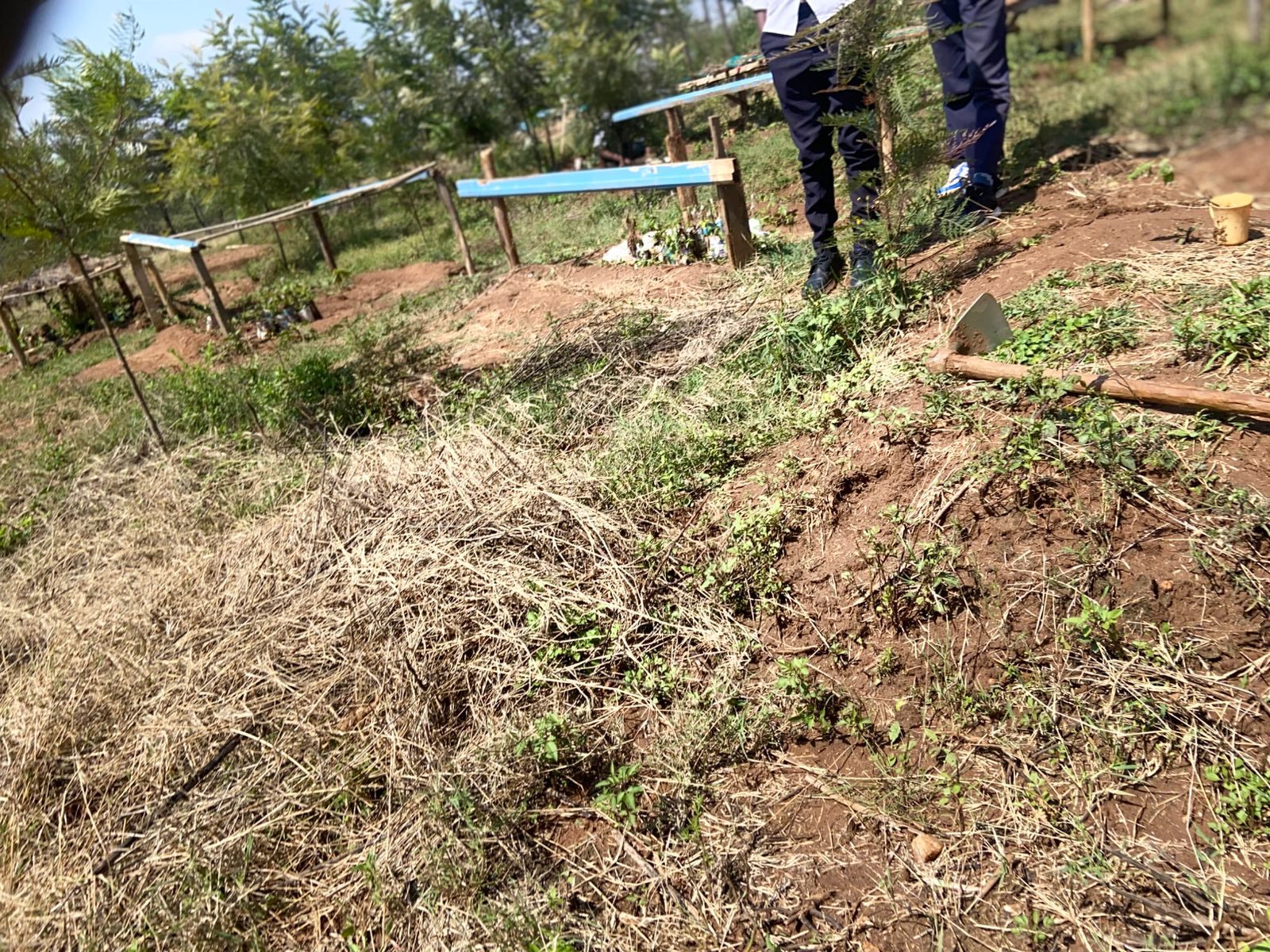

If you want to understand the scale of the climate crisis in Samburu, you look at the dry riverbeds. But if you want to see the literal engine room of our resistance, you have to walk through the gates of our community nursery in Mwangaza, located right within the Muslim area of Maralal town.
This is where the abstractions of climate work stop and the daily, muddy labor begins. We do not run this nursery in a remote, pristine forest block. We run it right here in the heart of Maralal, where the dust from the main roads settles on our seedbeds, and where the community can see exactly what we are building. The Mwangaza nursery is the birthplace of every single tree we plant across the region. If this site fails, our field projects do not happen. It is that simple.
Why Mwangaza, Maralal?
Setting up a major nursery in Maralal town was a deliberate strategic choice. Maralal is a hillside hub, but it is also expanding rapidly. As the town grows, the demand for charcoal, construction timber, and grazing space places immense pressure on the surrounding Loroghi Plateau.
By basing our nursery in Mwangaza, a vibrant, diverse neighborhood with deep historic ties to the early trading communities of Maralal, we ensure the project remains visible and accessible. We are not an invisible NGO working out of a closed compound. The local residents walk past our shade nets every single morning. They see our youth volunteers mixing soil, filtering seeds, and moving watering cans. This daily proximity breaks down barriers. It turns tree production from a specialized institutional task into a normal, neighborhood activity.
The Daily Blueprint of Production
A functioning nursery is a game of logistics, patience, and meticulous care. You cannot rush a seed, but you can easily kill it through neglect. Our operations at Mwangaza are managed by a dedicated team of young women from the Brilliant Feminine initiative, working in structured morning and afternoon shifts.
The nursery layout is divided into four distinct operational zones:
| Zone | Primary Purpose | Key Activities |
| The Preparation Area | Soil mixing and tube filling | Combining local topsoil, coarse river sand, and dried livestock manure. |
| The Seed Germination Beds | Early-stage growth | Managing high-density seedbeds covered with damp gunny sacks until sprouts emerge. |
| The Shade House | Protected development | Nurturing fragile seedlings under 50% shade netting to protect them from the midday heat. |
| The Hardening-Off Zone | Pre-planting preparation | Exposing older seedlings to full sunlight and reduced water to build resilience before field delivery. |
Every single stage requires direct human touch. Filling the plastic potting tubes is a rhythmic, exhausting job. Your fingers get stained with dark soil, and your lower back aches after the first two hundred tubes. We do not use mechanized fillers. We use recycled plastic cups to scoop the soil mix into the tubes, packing them down just tightly enough so the soil doesn’t wash out during watering, but loose enough for the delicate root tips to push through.
Solving the Water Puzzle
The biggest challenge of running a tree nursery in a semi-arid town like Maralal is water. A nursery requires a consistent, reliable supply of water every single day. If you skip watering for forty-eight hours during the dry season, you can lose an entire cycle of five thousand seedlings.
In Mwangaza, we manage our water supply with extreme discipline. We have installed a rainwater harvesting system that channels every drop of rain from the neighboring roofs into two ten-thousand-liter storage tanks. When the dry season drags on and the tanks run low, our team shifts to conservation mode.
We do not use hoses or sprinklers—they waste far too much water through evaporation. Instead, we use classic metal watering cans with fine roses. We water at the base of the stems, performing the task strictly before 8:00 AM and after 5:30 PM when the sun is low. This minimizes evaporation loss and ensures the water penetrates deep into the potting tubes. Every cup of water used in Mwangaza is tracked because we know exactly how hard it is to secure.
What We Are Growing Right Now
Our current stock at the Mwangaza nursery reflects the ecological needs of the Samburu lowlands and riparian zones. We do not prioritize fast-growing exotic trees that drain the local water table. We grow what belongs here.
Right now, our beds are holding over 8,000 active seedlings across three priority species:
- Olea europaea (Wild Olive / Mutamaiyu): A slow-growing, incredibly hardy indigenous tree known for its deep root networks and cultural significance to the Samburu community.
- Acacia tortilis (Umbrella Thorn / Lderkesi): The essential backbone of savanna ecology, grown specifically for our lowland restoration drives.
- Cordia africana (Large-leaved Cordia / Mringaringa): Raised specifically for planting along the collapsing banks of seasonal streams near town.
[Mwangaza Nursery Stock - Current Cycle]
├── Indigenous Canopy (Wild Olive & Cordia) ── 3,500 Saplings
├── Dryland Resilience (Acacia & Desert Date) ─ 4,500 Saplings
└── Total Active Output: 8,000+ Potential Trees
The Hardening Process: Training Trees for the Wild
The most critical phase of our nursery work happens in the hardening-off zone. When a seedling spends its first three months under our green shade nets, receiving water twice a day, it becomes soft. If we took that seedling straight from the shade house and planted it into the baked, wind-swept plains of Wamba or Suguta Marmar, it would die of shock within a week.
One month before a major planting drive, we move the selected batches out into the open sun. We deliberately cut their water ration in half—watering them once every two days instead of twice a day. The leaves might yellow slightly, and the stems stiffen. This process forces the plant to adapt to stress while it is still within our care. We are training them to face the real world. When you see a batch of acacias with thick, woody stems and deep, tough roots sitting in the full sun at Mwangaza, you know they are ready to survive the open savanna.
A Community Space
Our nursery in Mwangaza Muslim has grown into more than just a production site; it has become an informal educational space for the neighborhood. Local primary school children often peer through the wire mesh on their way home, watching us work. Elders stop by to point out specific indigenous saplings, sharing traditional knowledge about which leaves can be used for livestock medicine or which trees draw water closer to the surface.
We do not hide our methods. When a local farmer wants to know how to germinate acacia seeds using the boiling-water method, we invite them inside, hand them a basin, and demonstrate the process step-by-step.
We are not just producing trees in Mwangaza; we are cultivating the local skills required to manage them. Every sack of manure collected, every tube packed, and every watering can carried by our youth team is a direct contribution to the long-term stabilization of the Samburu landscape. The work is quiet, repetitive, and dirty—and it is the foundation of everything we do.